Biodegradable vs Compostable vs Plastic Bags: What Should an Indian Business Buy?
On this page
- What does "biodegradable" actually mean?
- What makes a bag "compostable"?
- How is a compostable bag different from a plastic carry bag?
- "Compostable plastic" or "I am not plastic"? Which is right?
- Will a compostable bag compost anywhere?
- So which one should your business buy?
- What does Earth Bound make?
- Frequently asked questions
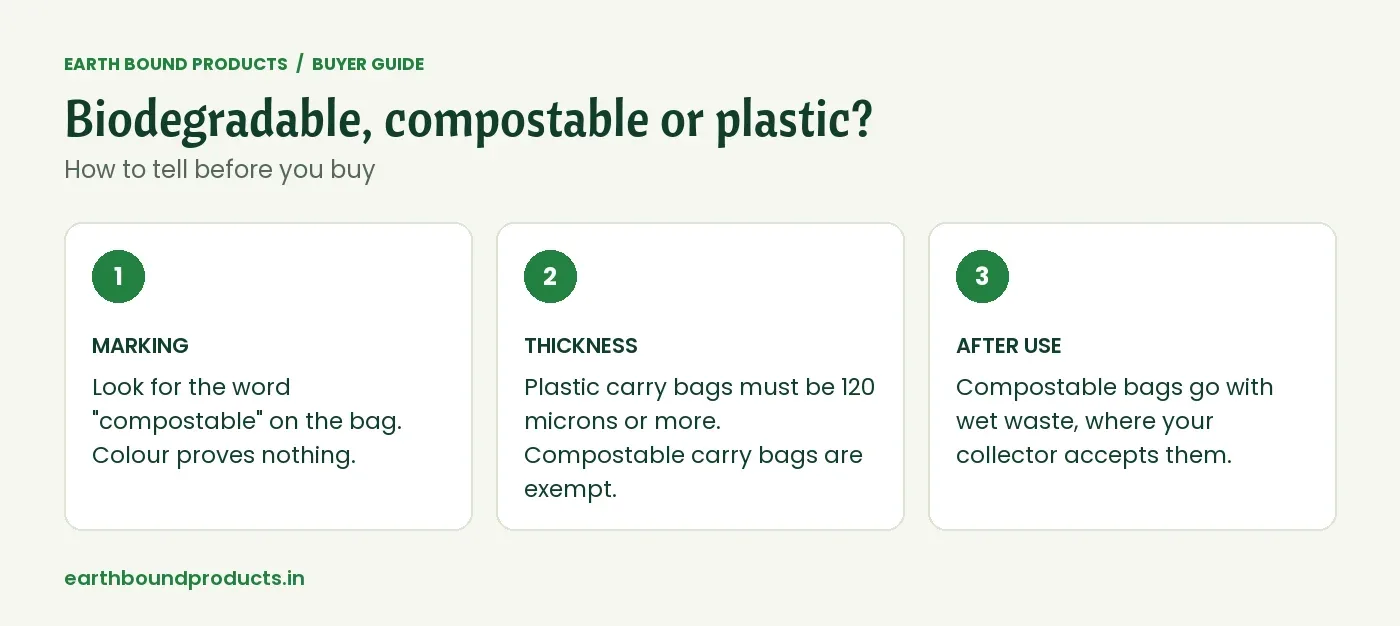
"Biodegradable" only says a material breaks down at some point, under some conditions. "Compostable" is a stricter, tested promise: the bag must break down in a composting process within a set time and leave nothing harmful behind. Conventional plastic bags do neither. If you want a bag you can explain to customers and to an inspector, buy certified compostable and plan where the used bags will go.
In India the difference also has a legal side. It is written into the Plastic Waste Management Rules, and it changes what you are allowed to sell or hand over at your counter.
What does "biodegradable" actually mean?
Almost everything biodegrades if you wait long enough. That is the problem with the word. A bag sold as "biodegradable" may take years to break down, may only break into small pieces, or may need conditions your city's waste system never provides.
So when a supplier says "biodegradable", ask three questions:
- Breaks down into what?
- In how long?
- Under which test standard?
If there is no clear answer, treat the word as marketing.
What makes a bag "compostable"?
A compostable bag has to pass a test. The material must break down in a composting process within a fixed time, without leaving toxic residue.
India's Plastic Waste Management Rules link compostable plastic to the Indian Standard IS/ISO 17088 (Specifications for Compostable Plastics). Under the rules, compostable carry bags must also be marked "compostable".
That is why the label matters. A green colour or a leaf printed on a bag proves nothing.
How is a compostable bag different from a plastic carry bag?
| Question | Conventional plastic carry bag | Certified compostable bag |
|---|---|---|
| Minimum thickness rule | At least 120 microns (since 31 Dec 2022) | Exempt from the thickness rule |
| What it is made to do after use | Be collected and recycled, if your area does that | Break down in a composting process |
| Marking on the bag | Maker's name, registration and thickness | "Compostable" marking |
| Where the used bag should go | Dry waste / recycling | Wet or organic waste stream, where your collector accepts it |
The 120-micron rule is why thin plastic carry bags disappeared from many counters. Compostable bags do not have to meet that thickness, so a 30–50 micron compostable carry bag is legal and still strong enough for everyday loads.
"Compostable plastic" or "I am not plastic"? Which is right?
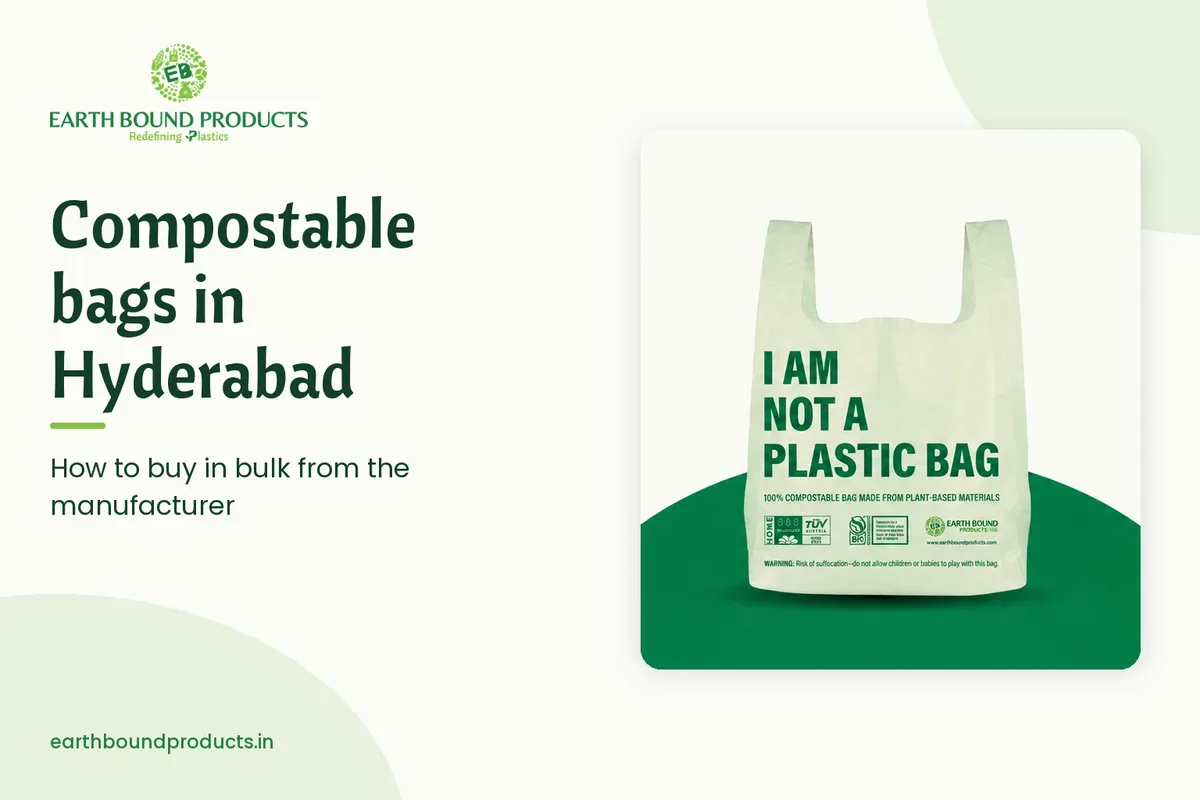
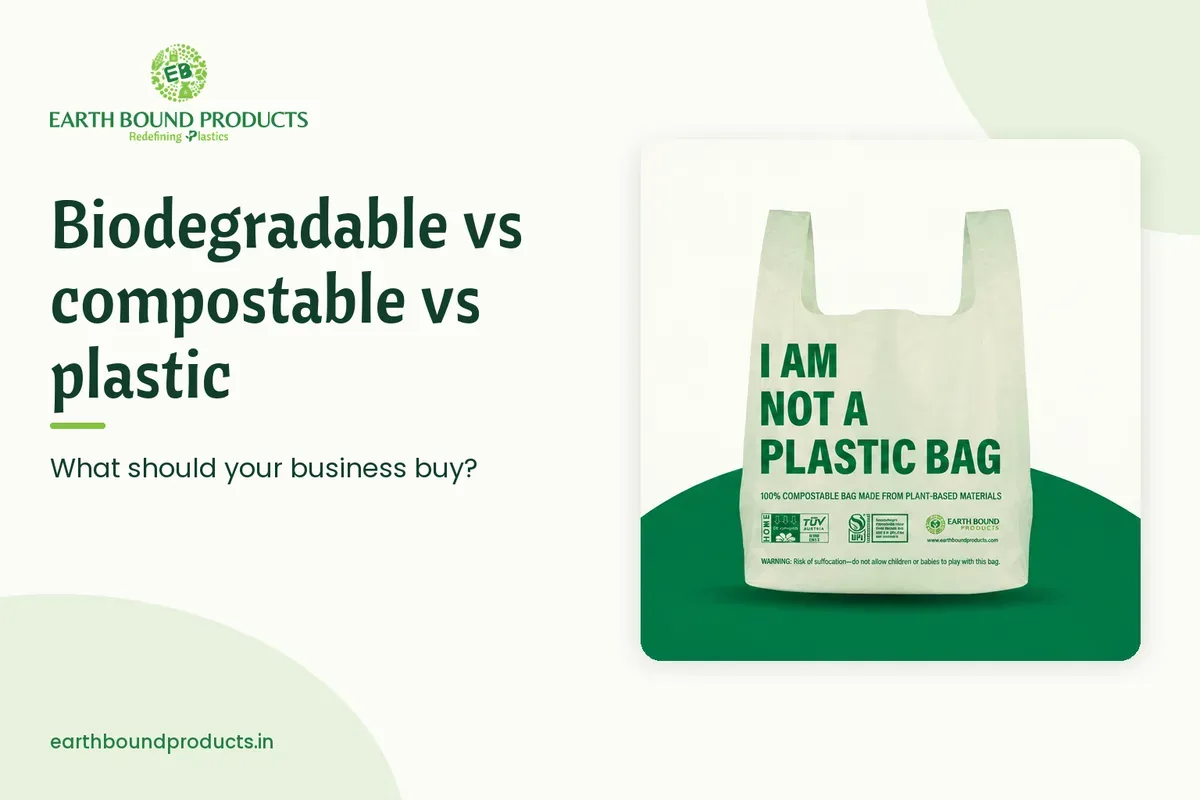
Both, in their own way. The rules and standards call the material "compostable plastic", because it is a flexible film made to behave like a bag. Our carry bags are printed "I am not plastic" because they are not conventional polythene: they are made to compost, not to sit in a landfill.
For your customers, the simple version works: it looks like a bag, it carries like a bag, but it is not polythene. It belongs to our range of 100% Certified Compostable Products.
Will a compostable bag compost anywhere?
No. Compostable bags break down in composting conditions: the right mix of heat, moisture and microbes. Thrown on a roadside or mixed into dry waste, they will not do their job.
Two rules of thumb:
- Keep compostable bags out of plastic recycling. They are not meant for it (the US EPA gives the same advice).
- Put used compostable bags with wet (organic) waste only where your collector or composting facility accepts them.
Since 1 April 2026, India's Solid Waste Management Rules, 2026 ask everyone to separate waste into four streams: wet, dry, sanitary and special care. A compostable bag fits naturally into the wet-waste stream, which is meant for composting or bio-methanation. We explain how to set this up at work in our guide to compostable garbage bags for wet waste.
So which one should your business buy?
Start with what the bag has to do, then pick the material.
- Shop and takeaway counters: compostable carry bags. You avoid the 120-micron plastic rule and the bag tells a clear story to customers.
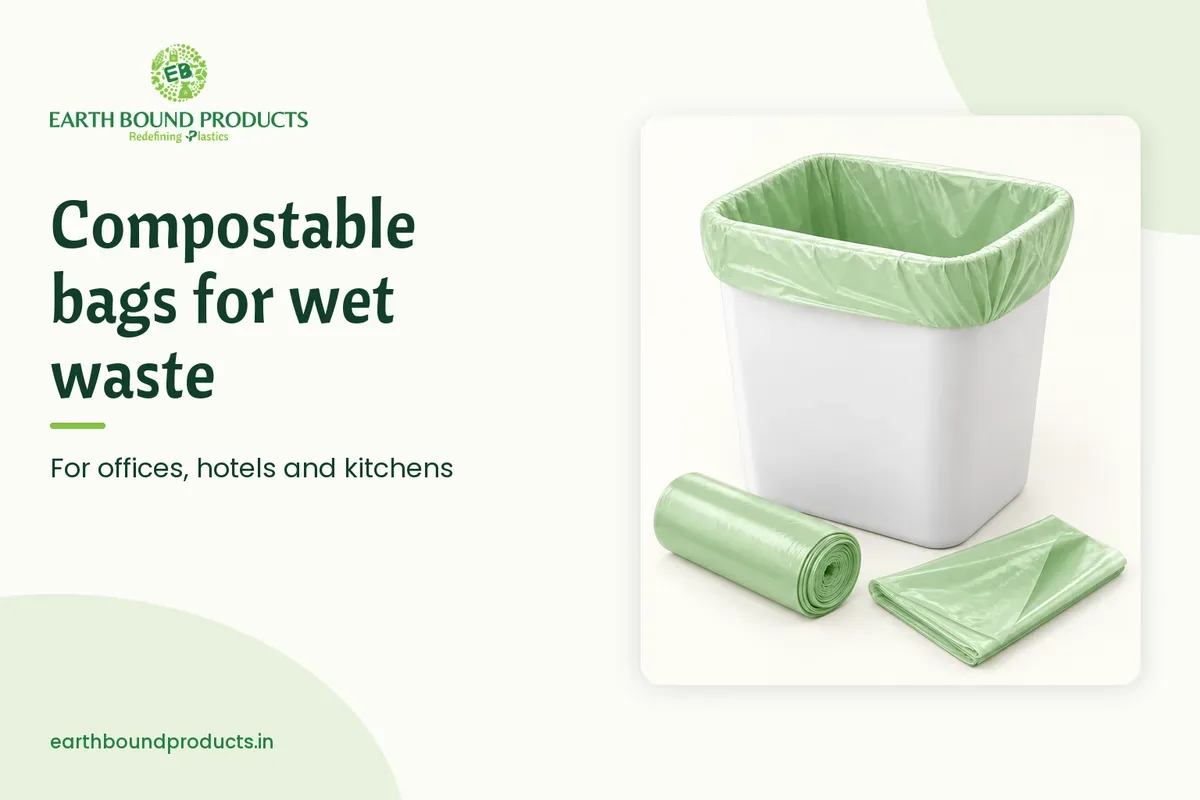
- Kitchens, canteens and offices: compostable garbage bags and bin liners for wet and dry waste.
- Fruit, vegetable and grocery sections: compostable produce bags.
- Clothing stores: compostable garment bags.
Whatever you choose, test a sample with your real load before a bulk order. Our older guide on choosing compostable packaging walks through bag types one by one.
What does Earth Bound make?
Earth Bound Products manufactures compostable bags at our plant in Medchal, near Hyderabad. Our compostable range is DRDO Approved, Backed by DRDO technology and sold as 100% Certified Compostable Products. Everything is Made in India.
The compostable range covers carry bags (U-cut, W-cut and D-cut), produce and grocery bags, garbage bags and bin liners, medical waste bags, garment bags and pouches. Carry bags run from 8×10 to 27×30 inches, in 30 to 60 microns.
If you are in Hyderabad, our local buying guide explains how to order in bulk.
Frequently asked questions
Is a biodegradable bag the same as a compostable bag?
No. "Compostable" means the bag has passed a composting test within a fixed time. "Biodegradable" has no fixed time or test unless the supplier names one.
Do compostable carry bags have to be 120 microns thick?
No. The thickness rule in India's Plastic Waste Management Rules does not apply to carry bags made of compostable plastic.
Can I put compostable bags in plastic recycling?
No. Keep them out of the plastic recycling stream and send them with wet waste where your collector accepts them.
How can I check if a bag is really compostable?
Look for the "compostable" marking and buy from a certified compostable range. Colour, texture or smell are not proof.
How can I keep compostable packaging costs down?
Choose the right size and thickness for the load, and keep to a few standard sizes. See 5 ways to cut packaging costs and stay compostable.
Talk to us
Tell us what you pack, how much it weighs and how many bags you use in a month. We will suggest a size and thickness and send a quote.
+91 91606 46468, +91 91606 56568 | www.earthboundproducts.in
Call us, email enquiry@earthboundproducts.in, or use the form on our contact page.